
Skip to content
IRLInteractions & Relationships Lab
IRL Lab · now
where do you want to go?
Research Projects

Relationships, in the digital age.

The IRL studies how relationships shape adolescents’ mental health in the digital age. We use brief surveys sent to participants’ phones and, in some studies, information that phones collect in the background to understand daily experiences.

Recruiting now

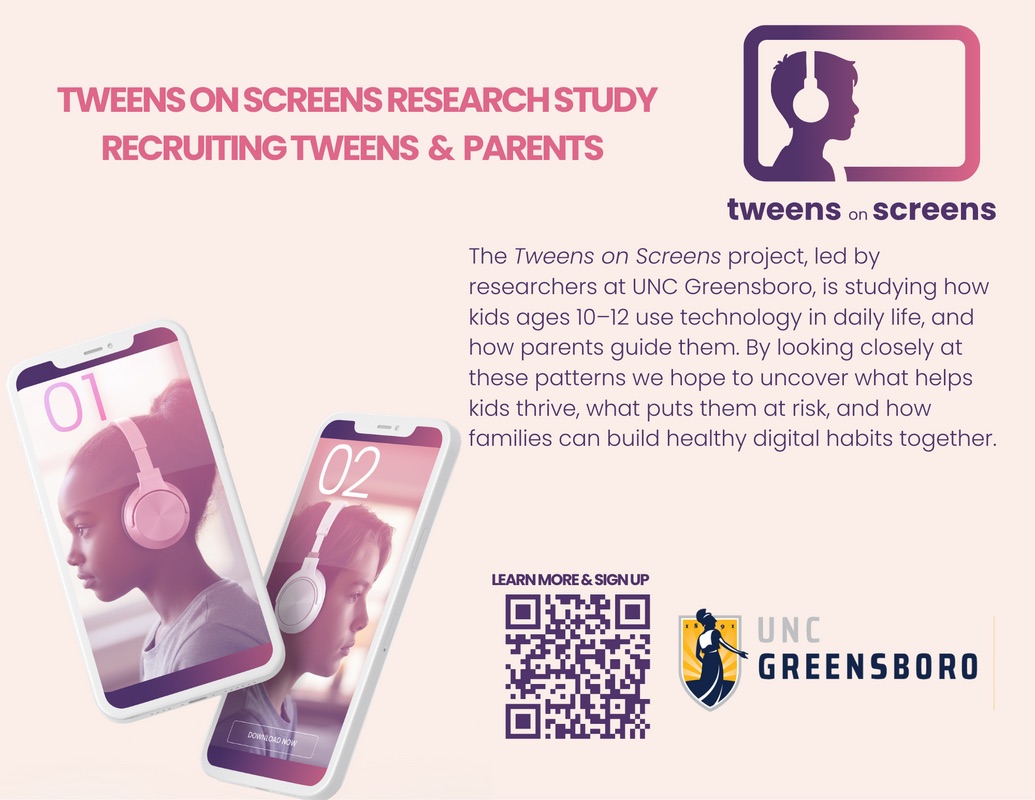
Tweens on Screens

Currently in data collection, this project studies how kids ages 10–12 use technology in daily life, and how parents guide them. By looking closely at these patterns, we hope to uncover what helps kids thrive, what puts them at risk, and how families can build healthy digital habits together.

Our goal is simple: to give parents science-backed tools and tips for raising confident, well-balanced kids in the digital age.

A collaboration with UNCG faculty in Developmental Psychology (Jessica Dollar) and Kinesiology (Laurie Wideman).

Learn more & sign up →
Tweens on Screens flyer showing two phones with tweens wearing headphones
02

Parent–child textingParenting in a Digital Age

Parents and children are more digitally connected than ever before, but there is little research on the ways in which technology may impact the parent–child relationship.

We have developed a coding system for aspects of parent–child text interactions (warmth, monitoring, conflict), and applied it to 30,000+ text messages between college students and their parents.

Top researchers on what matters in parenting research today.

04

Language & big dataText Message Content as a Window into Youth Alcohol, Substance Use & Mental Health

Text messages can offer a window into young adults’ lives, but researchers need reliable ways to study patterns in them. This project examines language in participants’ messages to better understand alcohol use and mental health.

We developed an “Alcohol Talk” word list to measure alcohol-related language and its connection to drinking on the same day. We also study whether similarities in the way two people write to each other relate to depression risk.

Want to be part of the research?